
I thought I couldn’t draw …
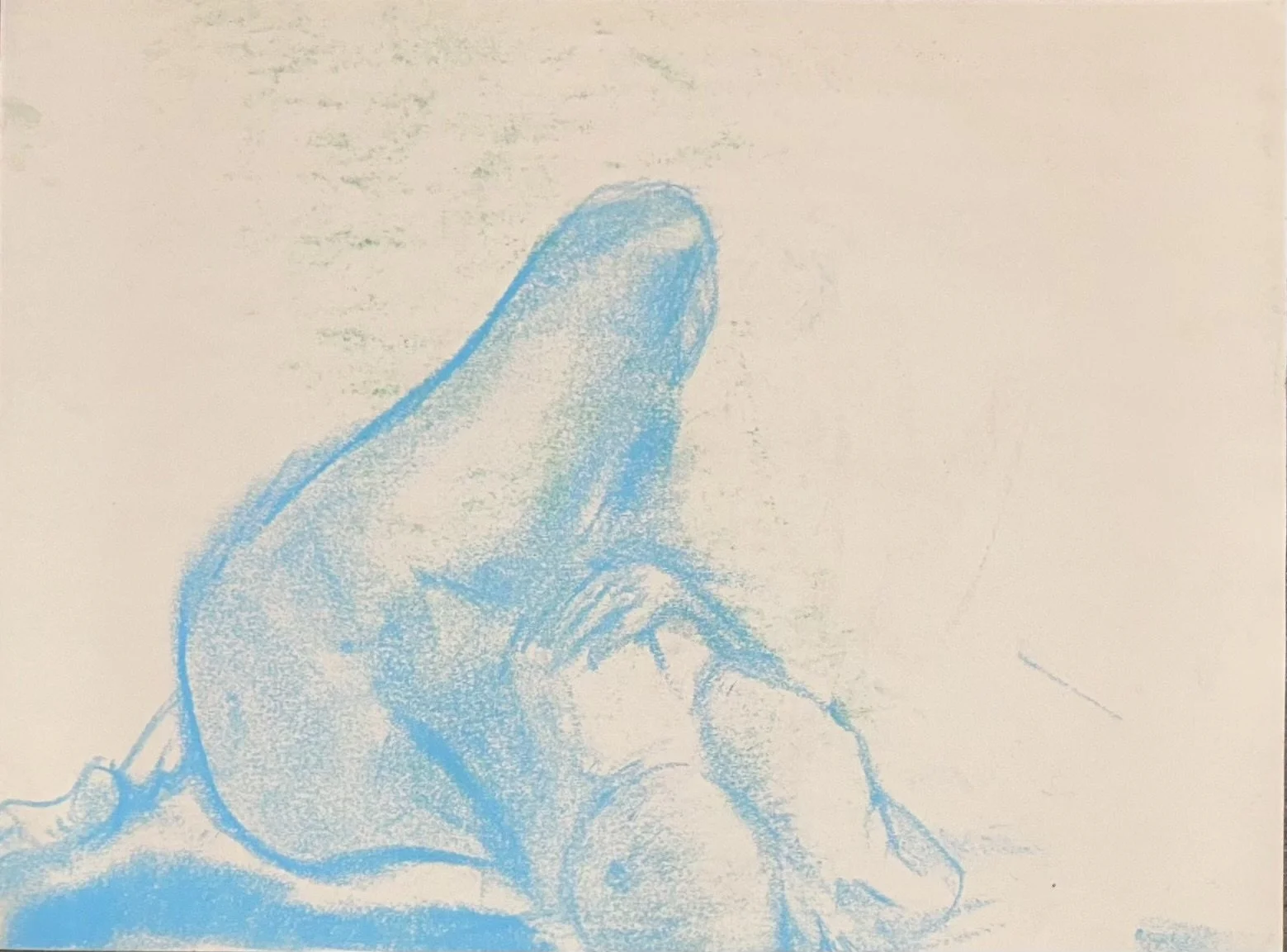
Last Friday, I was gifted a revelation: you don’t have to draw with a pointy-tipped thing, however blunt or feathery, that makes lines.
The last drawing class I took was Art in seventh grade—and it wrecked my straight-A report card. My dad drew constantly, while we were talking, and my sister draws brilliantly too. I’ve never been able to draw to my liking, so it took a bit of courage to attend my friend Alex Alford’s life drawing session last Friday.
It wasn’t a class—just a session with a model, Lyra, and maybe 10 people in the room plus four or five Zooming in from Tokyo, Singapore, and elsewhere.
I figured that, since I’m exploring imaginative intelligence, it would be good for me to try a new creative practice, one that required attention rather than imagination and demanded a skill I didn’t have. Certainly there was no possibility in my mind that I’d be able to produce anything I liked.
I’ve learned in the last two decades to value throwaway writing; in other words, it doesn’t have to be good or go anywhere beyond the page it’s on. Making writing about the process, not the result, had the paradoxical effect of vastly improving my results. But with drawing, the results didn’t matter. It was entirely throwaway. Just research.
Alex gave me a quick 10-minute lesson before the others arrived. Given the choice of pencil, charcoal, or pastel, I’d certainly have chosen pencil, since only artists use art materials. But Alex put a pastel in my hand and showed me how to hold it: lengthways. You make marks with the long edge, not the end.
Who knew?
Maybe when you get past beginner stage you use the end, but I wouldn’t know. Alex showed me how to make swooping marks, pressing a bit more heavily on one end than the other, with my index finger or my pinkie. Instant shading! Even a line could be drawn with the entire length of the pastel. The first marks I made looked almost like I knew what I was doing.
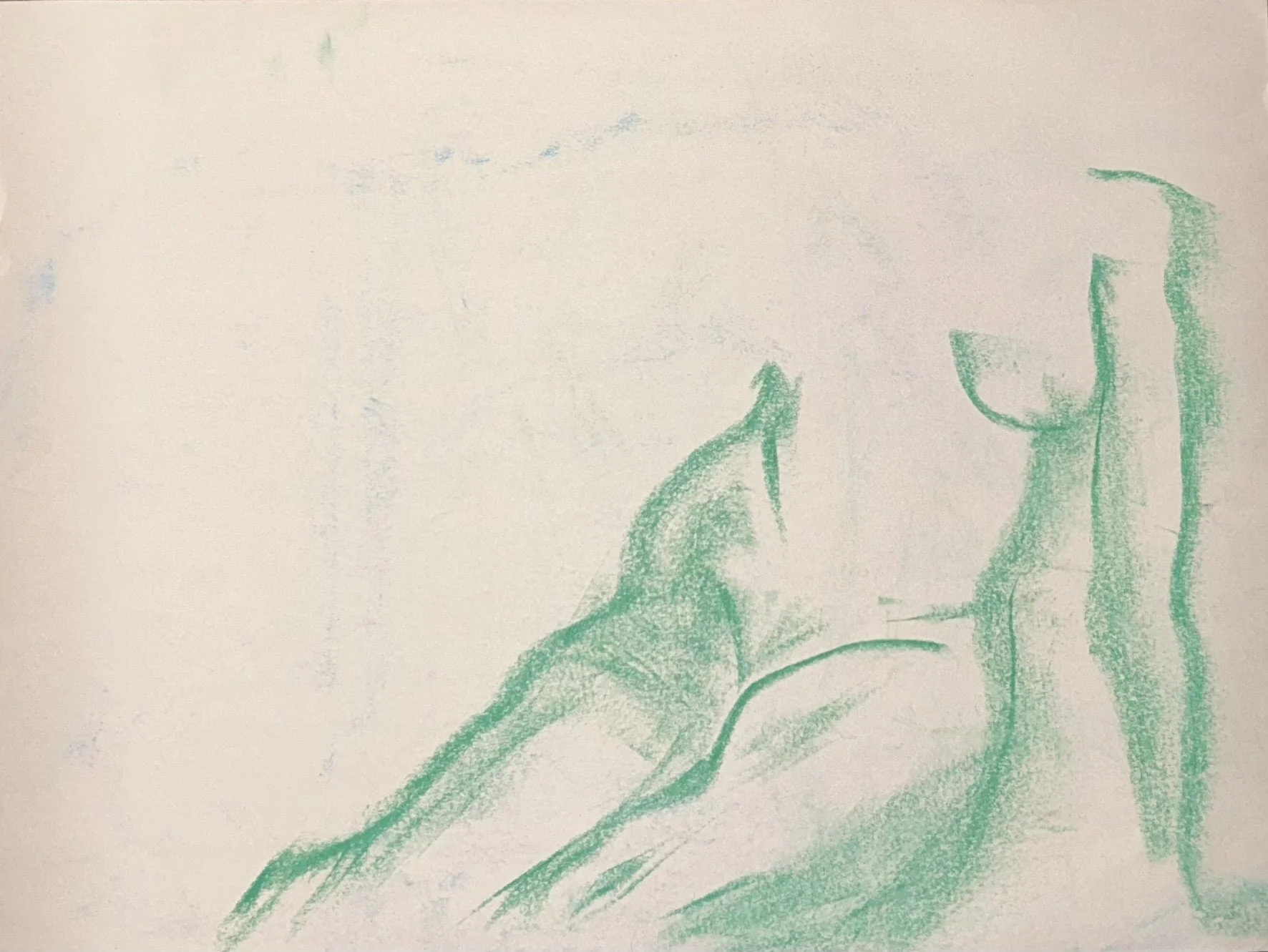
A one-minute pose
Some poses Lyra held for only a minute, others for five minutes, others for ten or fifteen. The longer ones challenged my skill level, so I started again on the same paper, making doppelganger swoops, shadow twins. Often the picture would collapse into chaos, but I didn’t mind. I was just playing.
I was making shapes, not lines—which freed me from trying to get the lines right. Every mark I made could be approximate rather than definite. And the marks were big, not fiddly. I was in my body, not my head.
Of course, I was looking closely at the model, finding edges and highlights and shadows. I wasn’t doing “therapy drawing,” as if from my subconscious. But I noticed immediately that using the pastels rather than a pencil freed me from “good” and “bad.” I was alive to the judgment of “Have I caught that?”, but not to my default judgment of “This is terrible. I can’t draw.”
I definitely felt a lack of mastery of my tools. Often, my marks didn’t match up accurately. The model’s arm would join up to her ribcage, or I’d get confused between a crease at the top of her thigh and a crease on her stomach, or the line of her spine would go wonky as I tried to suggest it with small divots of shadow. I think, in the first drawing (my favorite), she has more than five fingers. But so what? And what a gift to think, “So what?”
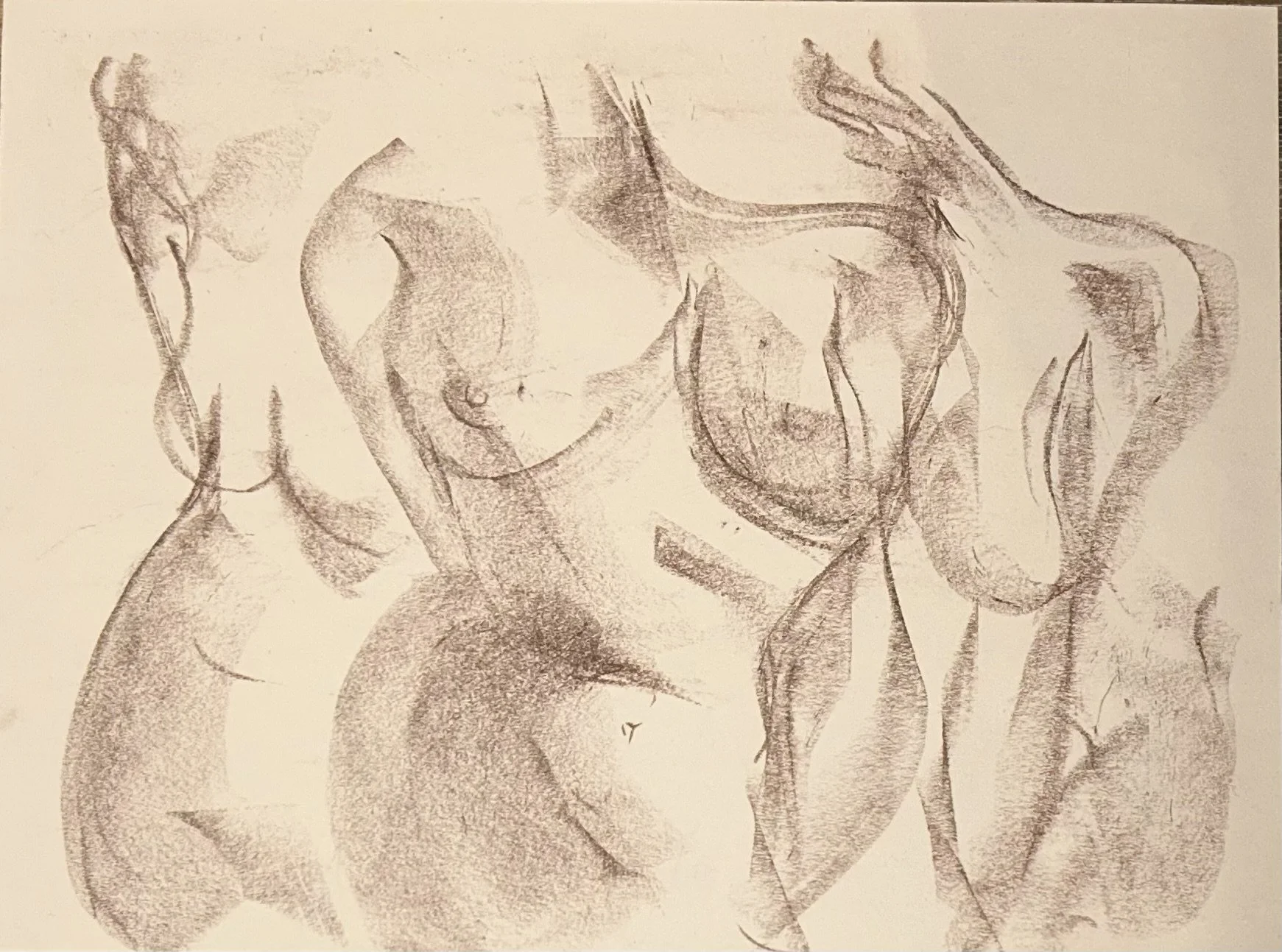
Alex is giving an actual class on March 14, and I’m planning to be there. I’ve discovered—big shock here—that I love learning to do something I don’t care if I can ever do well. Maybe I’ll even be brave enough to try a face.
And here’s a drawing by Alex, which we used as an Imaginative Storm prompt two Saturdays ago. Yes, you can add imagination to life drawing!
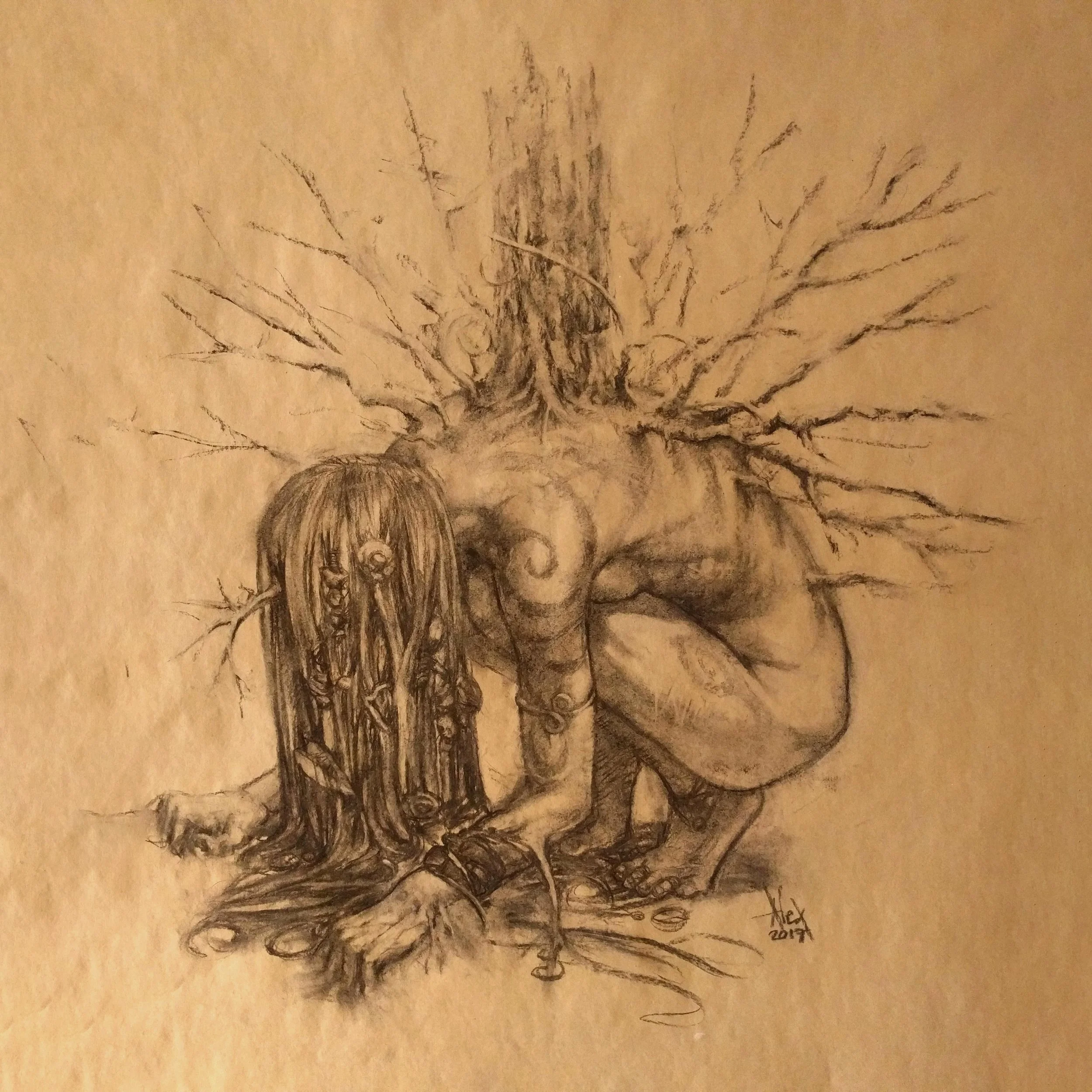
Check out more of Alex’s work on Instagram @alexdrawslife and @alexdrawslines, and also at alexdrawslife.com and alexdrawslines.com. You can register for a life drawing session at justdrawtheboots.com.